How to find competitor backlinks (and tell which ones are worth copying)
Type your competitor's domain into any backlink tool and you'll get a list. Sometimes thousands of rows. And that's exactly where most people freeze, because a list is not a plan.
The first time I did this properly, I exported 4,200 referring domains for a client in the home-services niche, handed the spreadsheet to their content lead, and watched nothing happen for six weeks. Nobody knew which links to chase. So we went back and rebuilt the process around a simple question: which of these links could I realistically earn too? That reframing took our outreach reply rate from roughly 4% to somewhere near 14%, because we stopped pitching strangers and started pitching pages that already liked the topic.
Below is the method I actually use now — how to find competitor backlinks, how to filter the junk out, and how to turn the survivors into something you can act on this month.
Key Takeaways
- Competitor backlink data is public — you can pull it with free tools, but the free tiers cap how many rows you can see.
- Always analyze referring domains, not raw backlinks. Ten links from one site count as one relationship.
- Filter for dofollow first, then sort by authority, then judge topical relevance by hand.
- Roughly a third of a competitor's best links come from pages you can't replicate — brand mentions, press, directory noise. Skip those.
- The three repeatable formats are resource pages, guest posts on niche sites, and broken-link replacements.
- Backlinks still move rankings in 2026, but volume alone stopped working years ago. Relevance and page-level context do the heavy lifting.
How can I find my competitors' backlinks?
You enter a domain into a backlink checker and read the output. That's the honest short answer. The long answer is about which output you read, because every tool shows you four or five different numbers and picking the wrong one wastes your afternoon.
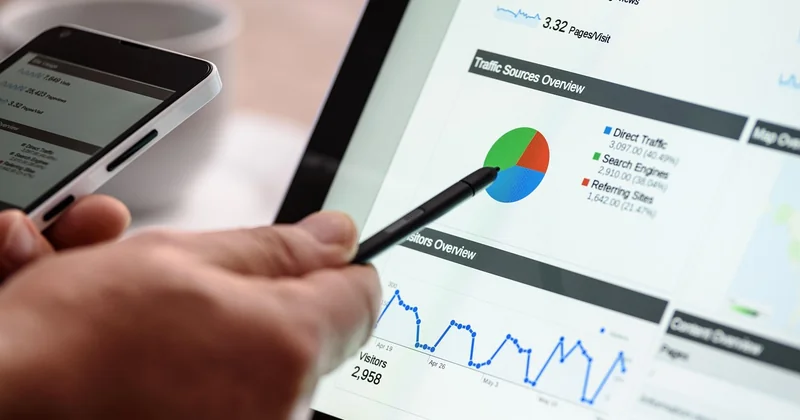
Step one: pick the tool tier that matches your budget
Free tools work. They just truncate. On a domain with 3,000 referring domains, a free checker might show you the top 50 to 100. That's enough to spot patterns, not enough to build a full gap analysis.
| Tool type | What you get | Best for | Watch out for |
|---|---|---|---|
| Free backlink checker (Moz, small SaaS tools) | Top slice of referring domains, basic authority metric | Quick sanity check on one competitor | Heavy truncation, sometimes stale index |
| Freemium suite (Semrush, Ahrefs) | Full referring domain list, filters, anchor text, lost links | Real gap analysis, outreach prep | Row limits and export caps on lower plans |
| Google Search Console (your own site only) | Your actual link data as Google sees it | Reality-checking what your tools claim | No competitor data at all |
| Manual SERP archaeology | Context: where the link sits, how it's framed | Qualifying individual opportunities | Slow. Very slow. |
In my opinion, if you're doing this more than twice a year, pay for one suite and stop juggling four free checkers. The saved time pays for the subscription by the second campaign.
Step two: read referring domains, not backlinks
This is the single mistake I see most often. A competitor shows 12,000 backlinks and you panic. But 11,000 of those might come from 400 domains — comment spam, forum signatures, a syndicated press release. Referring domains is the number that matters, because a link's value comes from the site, not the individual URL.
Switch the view. Sort descending by domain authority or domain rating. Now you're looking at a list of real relationships instead of a pile of URLs.
Step three: filter before you judge
Apply these filters in order, and you'll cut most lists by 70% or more:
- Dofollow only — nofollow links still carry some signal, but they're not worth an outreach campaign.
- Exclude your own domain — obvious, and people forget it constantly.
- Drop the spam — link farms, PBN footprints, foreign-language directories with zero editorial standards.
- Check the source page is indexed — a link on a deindexed page is a ghost.
- Look at when the link was acquired. A burst of 200 links in one week usually means a paid campaign or a viral moment you can't recreate.
What's left is your actual working list. Mine usually ends up between 30 and 80 domains for a mid-size competitor. That's a month of outreach, not a year.
Are backlinks still relevant in 2026?
Yes — with a caveat that trips up a lot of people. Volume stopped being a lever. A site with 400 genuinely relevant referring domains will outrank a site with 4,000 scraped ones, and I've watched that play out repeatedly on client projects.

What changed is how links get evaluated. Context around the link, the topical fit of the linking page, and whether the link sits in the main content versus a footer widget all pull weight. A single link from a respected page in your exact niche can outperform fifty generic ones, and I'd bet on that every time.
There's a second shift worth naming. Links your brand earns without asking — a journalist citing your data, a community thread recommending your tool — tend to sit on pages that also rank. Those pages pass traffic, not just authority. When you audit a competitor, look at which of their links sit on pages that actually get search traffic. Those are the ones to model your strategy on.
What actually moved rankings for me
On one project, we replaced a scattershot link-building push with a narrower campaign: 22 outreach emails to resource pages in the client's niche, each one offering a genuinely better version of a tool the page already linked to. Eleven replied. Nine links went live over three months. Organic sessions to the target cluster roughly doubled over the following quarter, and — more useful — the pages held their positions through the next two algorithm updates, which the older, link-volume-driven pages didn't.
That's a small sample, and I'm not going to pretend it's a law of nature. But the pattern has repeated often enough that I now treat link relevance as the primary filter and authority as the tiebreaker. Not the reverse.
How to find competitor keywords
Backlink analysis and keyword analysis are the same research project wearing different clothes. The pages a competitor earns links to are almost always the pages they're trying to rank — and the pages they rank with are the ones worth reverse-engineering.

The practical loop looks like this:
- Pull the competitor's top organic pages by estimated traffic, not by ranking count.
- For each page, note the primary term it targets — usually visible in the title, the H1, and the URL slug.
- Cross-reference that URL against their backlink export. Pages with both traffic and links are their winners.
- Look for topics they cover thinly, or not at all. That's your opening.
- Check whether the page answers a question your audience actually asks, or whether it's just keyword-shaped filler.
I'll admit I used to skip step four, and it cost me. I built a full content cluster on a topic a competitor already owned comprehensively — three months of work, no traction, because I was competing on their strongest ground instead of the gap next to it.
The gap that matters most
Not the keyword gap. The intent gap. A competitor might rank position two for a commercial term with a page that answers nothing — no pricing, no comparison, no next step. That page is beatable with a better answer, and the backlinks will follow once you have something people actually want to cite.
How to do a competitor analysis for SEO
Backlinks are one leg. A real competitor analysis covers four, and skipping any of them gives you a distorted picture.
- Technical posture — site speed, indexation, crawl issues. If they're bleeding pages from the index, their link profile matters less than you'd think.
- Content depth — how many pages per topic cluster, and how thoroughly each one answers its question.
- Link profile — referring domains, anchor text distribution, and which specific pages attract links.
- Conversion path — where their traffic lands and what it's asked to do.
Run these for two or three competitors, not one. A single competitor tells you what one site does. Three tell you what the niche rewards.
How to tell a replicable link from a dead end
This is the qualification step nobody explains, and it's where the real information gain sits. Go through your filtered list and classify each link:
Replicable: resource pages, curated link roundups, niche directories with editorial review, guest post slots, pages that link to a tool you can build a better version of, pages with broken outbound links in your topic.
Not replicable: brand mentions in news coverage, links from a partnership, links from a product they built that went viral, links from an interview they gave. Chase these and you'll write a lot of emails that go nowhere.
My rough split over the last few audits: about a third replicable, a third borderline, a third dead ends. Focus on the first third and you'll get more done in a month than most teams manage in a quarter.
What to do once you have the list
Three plays, in the order I run them:
- Resource page outreach. Find the page, read it, offer something better. Mention the specific link you'd replace and why yours helps their reader.
- Broken link building. Scan the competitor's outgoing links for 404s. Then build the missing resource and tell the page owner their link is broken.
- Skyscraper, but only where you can genuinely improve. Take their linked page, make a version with data they don't have, and reach out to the sites citing them.
Guest posting still works too, though I'd push you toward niche sites with real audiences over generic "write for us" farms. The links are weaker and the referral traffic is usually zero.
Do free backlink checkers actually work?
Yes, within limits. They show you a truncated slice of referring domains — enough to spot patterns and decide whether a deeper look is worth paying for. They are not reliable for gap analysis, because you can't see the full competitor list or export it in a usable form.
What's a realistic number of qualifying opportunities per competitor?
For a mid-size competitor in a normal niche, expect 30 to 80 referring domains after filtering. In very large or heavily-covered niches, that number climbs quickly, and you'll want to narrow by topic before you start outreach.
Should I copy a competitor's anchor text?
No. Anchor text should describe your page accurately. Copying theirs makes your profile look derivative and can read as manipulative if the anchors skew heavily commercial. Write anchors that fit the sentence they appear in.
The part most people skip
Finding competitor backlinks is the easy half. The hard half is deciding, link by link, whether the relationship behind it is something you can actually earn — and then doing the work of earning it.
Most teams stop at the export. A spreadsheet lands in a shared drive, someone flags it as "Q3 link targets," and nothing happens. The teams that win are the ones who take thirty domains, write thirty emails, and accept that twenty will be ignored.
One last thing worth sitting with. The best link you'll ever get from this process probably isn't the one your competitor has. It's the page their link profile reveals they've never been able to reach — a topic they've under-served, an audience they've ignored. Find that gap, and you won't be copying a link profile. You'll be building one nobody can copy back.